
Design for Additive Manufacturing (DfAM)
Can You 3D Print Threads?
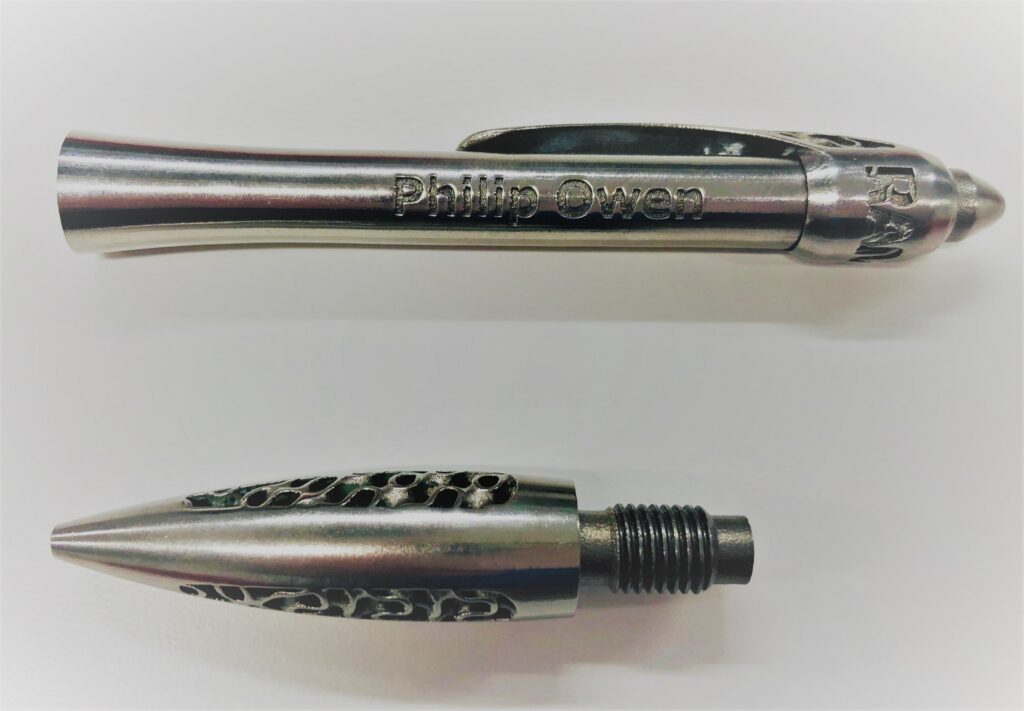
This is a question we get asked on a regular basis. The reason people want printed threads varies. Some customers find it less time consuming than drilling and tapping from scratch, some find it handy for fixing the part into a machining jig and others use it as a feature of their specific part. We…
Read MoreAdding Lattice Structures

One of the best ways to reduce mass without reducing too much structural integrity, is to add a lattice structure. The benefit of using a lattice over simply hollowing a part, is the lattice does not require internal support. When designed correctly, it can maintain good strength and performance. We can create a simple uniform…
Read MoreWe Really are Printing the Future!

We’ve been working in collaboration with Olaf Diegel and his team at Auckland University to print this valve block for a hydraulic system. Every now and then we are asked to print a part that simply blows us away in terms of how well it has printed and this valve block is so suited to…
Read MoreMore Small Companies Harnessing Metal 3D Printing Technology
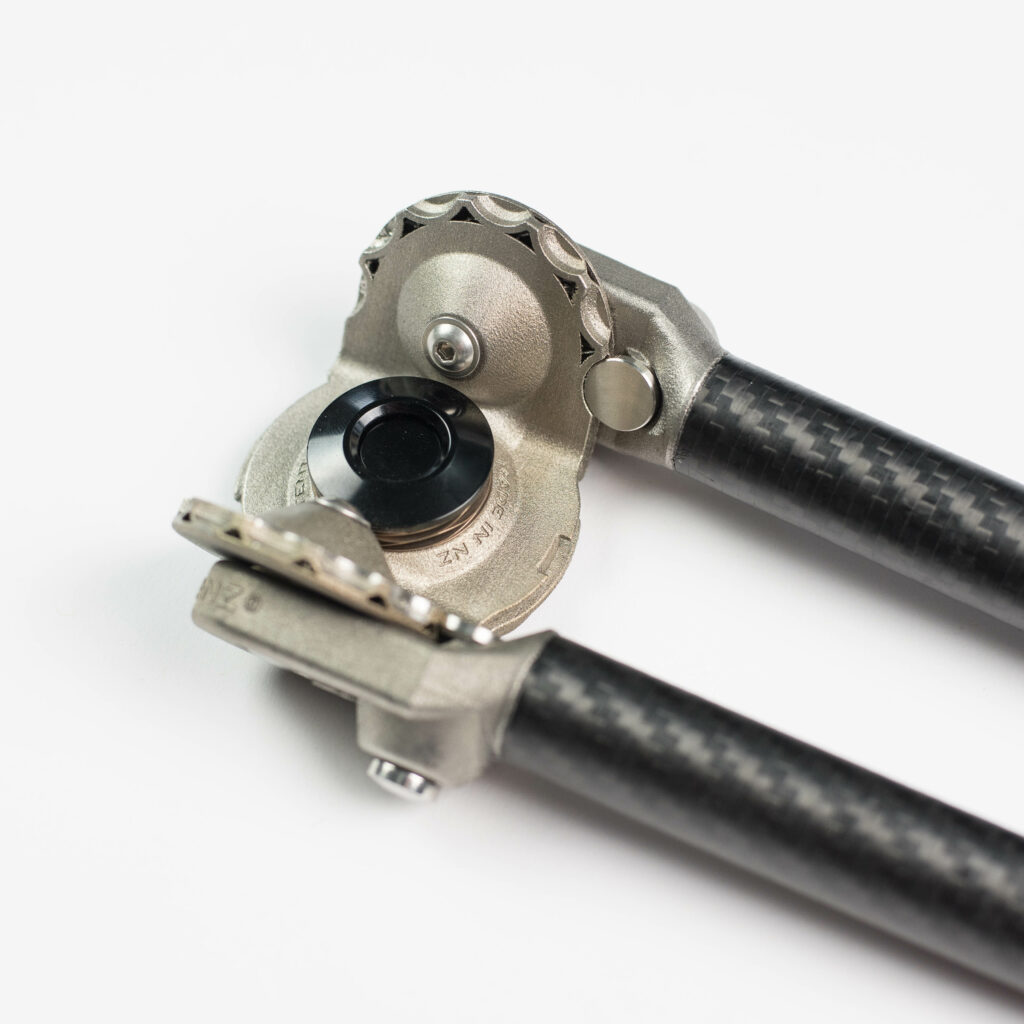
RAM3D have noticed an increase in smaller companies willing to embrace additive manufacturing and apply lessons they have learnt on their journey for their innovative products. One of these companies is Backlanz, owned by Ethan Todd, a full-time engineer with a passion for hunting and the outdoor life. He has designed a unique detachable lightweight…
Read MoreFit and Tolerance
One of the most common questions we are asked is “what is your standard fit and tolerance”? so we thought we would answer this. THREADS We print a lot of threads and can print them down to M3 size. Threads need to be modelled and not be cosmetic or visual. If your CAD software cannot…
Read MoreSupported Surfaces

Support is required for most metal 3D printed parts as it connects the part to the build plate. Support also holds up overhanging surfaces and helps maintain the structure. Surfaces below 45 degrees are likely to require support. Another use of support is to remove heat and stress build up within a part. The ideal…
Read MoreReducing the cost of Metal 3D Printing

The picture on the left is the original piece and the image on the right was printed in Titanium 64. Consideration of material properties will really help you get the most out of your part. Put simply, if the mass doesn’t need to be there, get rid of it! Traditional manufacturing and design methods tend…
Read MoreDesigning and Printing a 3D Ratchet Spanner

Gilly who worked for us, had asked us for a long while about having a 3D 10mm ratchet spanner printed for rigging her sculling boats. Seems like Christmas has come early for her! Phil designed the first prototype (gold coloured one). It is printed in stainless steel 15-5ph and was heat treated to 46 HRC,…
Read MoreThe ‘Ins and Outs’ of Supporting Your Parts

Every single part we 3D print requires supporting to the build plate. While some will only require minimal support where the part meets the build plate, others require significantly more, with some parts using more support mass than the actual part itself. With support contributing to the cost of the build, careful consideration of the…
Read MorePart Optimisation for 3D Metal Printing

When designing a part, a designer often has a manufacturing ‘method’ in mind. When designing a shaft, the designer looks to design around an axis of concentricity and the method for manufacture is turning. When designing a bracket, the designer may look for ways of holding the part for milling and how to minimise milling…
Read More